History
The line this movement stands in — told as wall texts, in the poster register: flat, bold, plain-spoken.
The first standing
France learns, in a single summer, that a room can be called to rise and refuse to sit back down. The Bastille falls on 14 July; within weeks, the Declaration of the Rights of Man and of the Citizen sets down the sentence every French rising since has quoted back to power: men are born and remain free and equal in rights. The column that stands on the Bastille's ground today is the same ground from which, 237 years later, the students of 2026 flew their banner. Ground remembers.
The Commune
For seventy-two days, Paris governs itself. The Commune raises the red flag over the Hôtel de Ville, opens the schools, separates church and state, and lets the people who work in a city decide how it is run. It is drowned in blood in the Semaine Sanglante, the Bloody Week — thousands shot against walls, the wall in Père Lachaise among them. The Commune lost. The idea did not. Every French barricade since stands partly on its stones.
The Resistance
Under occupation, rising stops being a metaphor. Ordinary people — railway workers, printers, students, teachers — carry messages, hide the hunted, print forbidden newspapers, and take up arms knowing the price in advance. The maquis take to the hills; the word résistant becomes the highest title a French citizen can earn without permission. When this house uses the language of resistance, it uses it in the shadow of people who paid for the word in full.
May
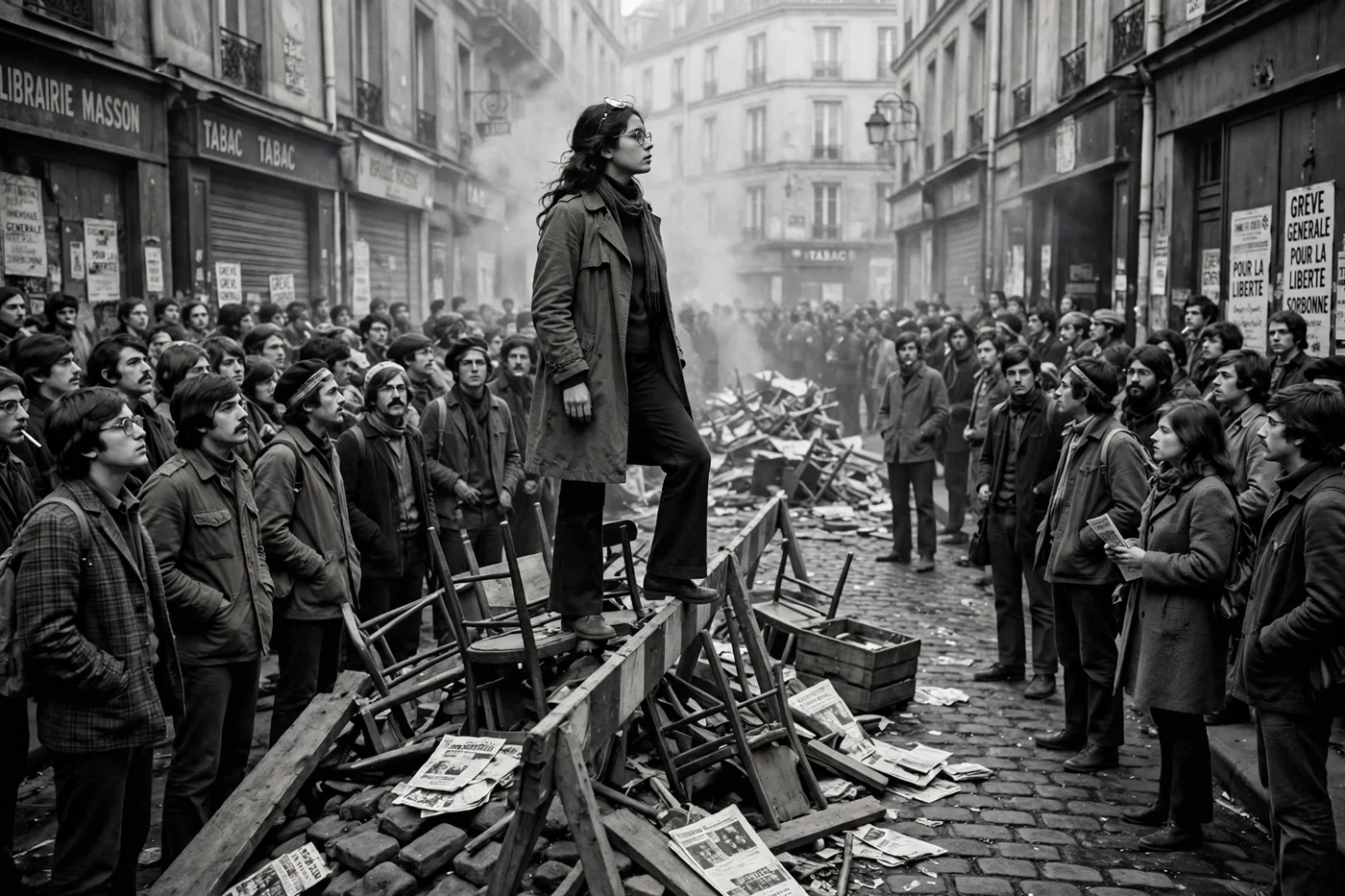
It starts, as it started again in 2026, with students. The universities close, the schools empty, and ten million workers follow the young into a general strike that stops the country. In the occupied Beaux-Arts, the Atelier Populaire prints the rising by hand, night after night — posters pasted up before dawn, gone by evening, printed again. Cobblestones come up out of the Latin Quarter streets, and a woman stands on a barricade of chairs above them, in the photograph this house carries on its lead print. May '68 did not take power. It took the imagination, and it has never entirely given it back.
The Yellow Vests
A fuel-tax rise brings the roundabouts of France into occupation. The gilets jaunes — working people in the high-visibility vests every driver carries — hold the roads for months against a government they say cannot see them, and their demands widen from fuel to wages, dignity, and a voice in how the country is run. The state answers with a level of street force France has not forgotten; the injuries of those years are part of why police violence stands named in the demands of 2026. Some of the vests of 2018 walk in the marches of this autumn, beside the students.
Bloquons tout
"Block everything." The call that rose in 2025 takes the blockade — of roads, depots, schools, the machinery of an ordinary day — and makes it the people's veto: a country that will not listen will be stopped until it does. Bloquons tout is the direct rehearsal for the autumn of 2026. The lycée students who walked out in September had grown up watching the tactic work.
The newest chapter
The schoolchildren move first, over the underfunding of their schools. Then the country moves with them: more than a thousand lycées struck or blockaded, the grandes écoles, the teachers, the nurses, the firefighters, the parents — 800,000 in Paris on 17 October, marches in 140 other cities, and more than 6,600 arrested, most of them young. The GEN Z banner flies from the Bastille column, on the ground where this room began. This chapter is still being written — THE RECORD keeps it, entry by entry, as it happens.
And we will be part of that history.